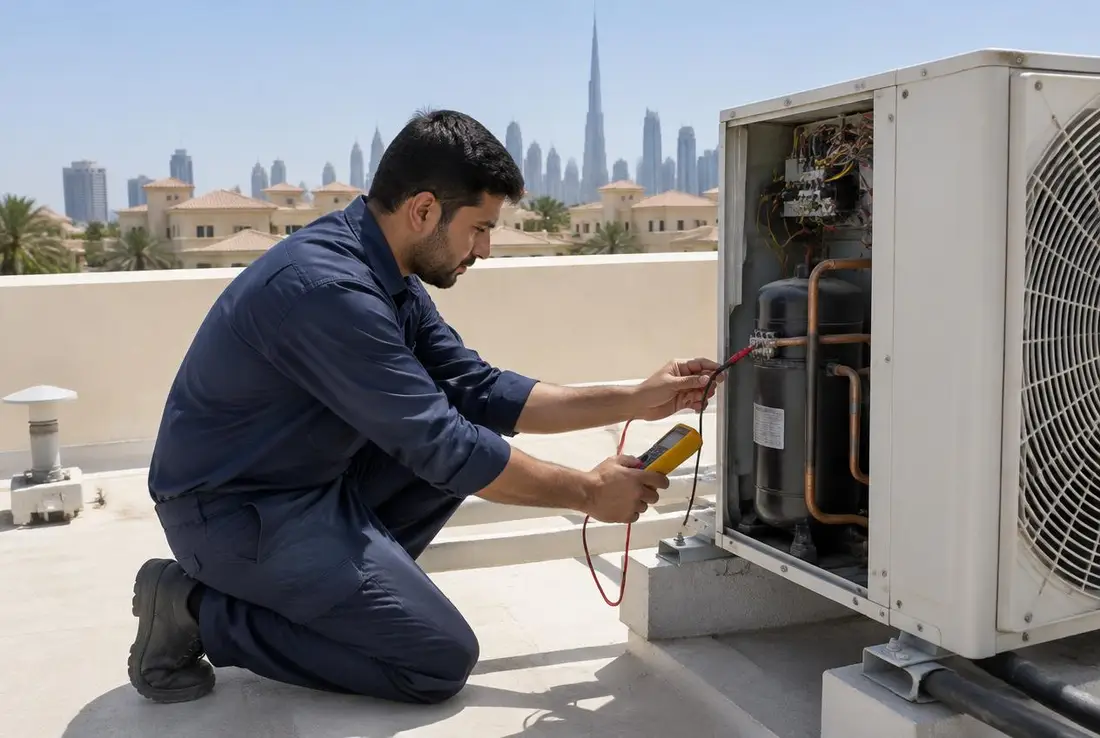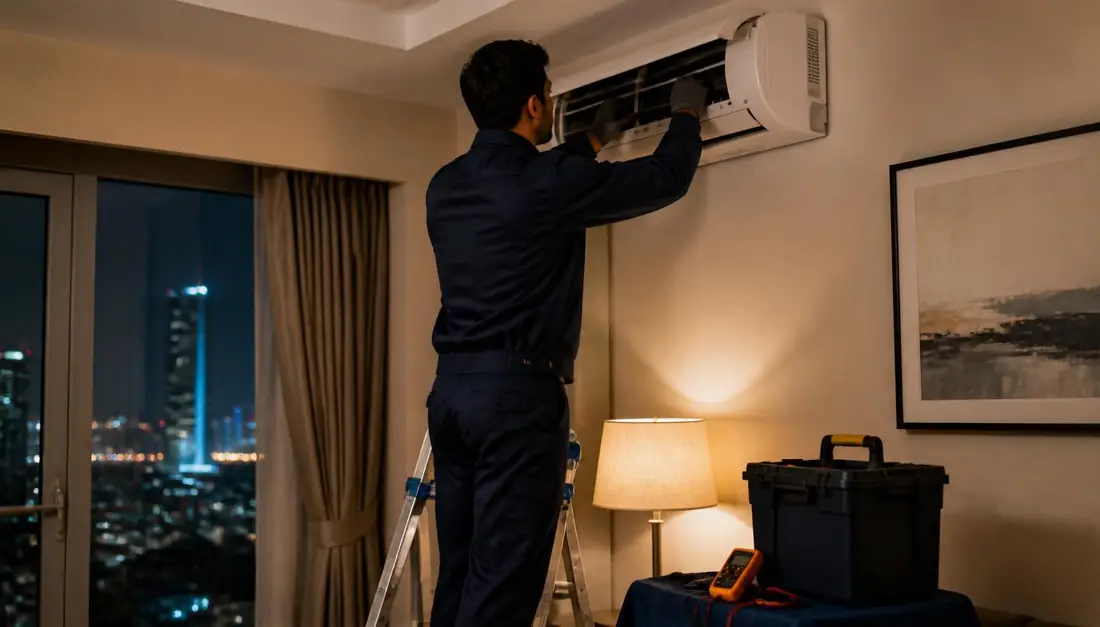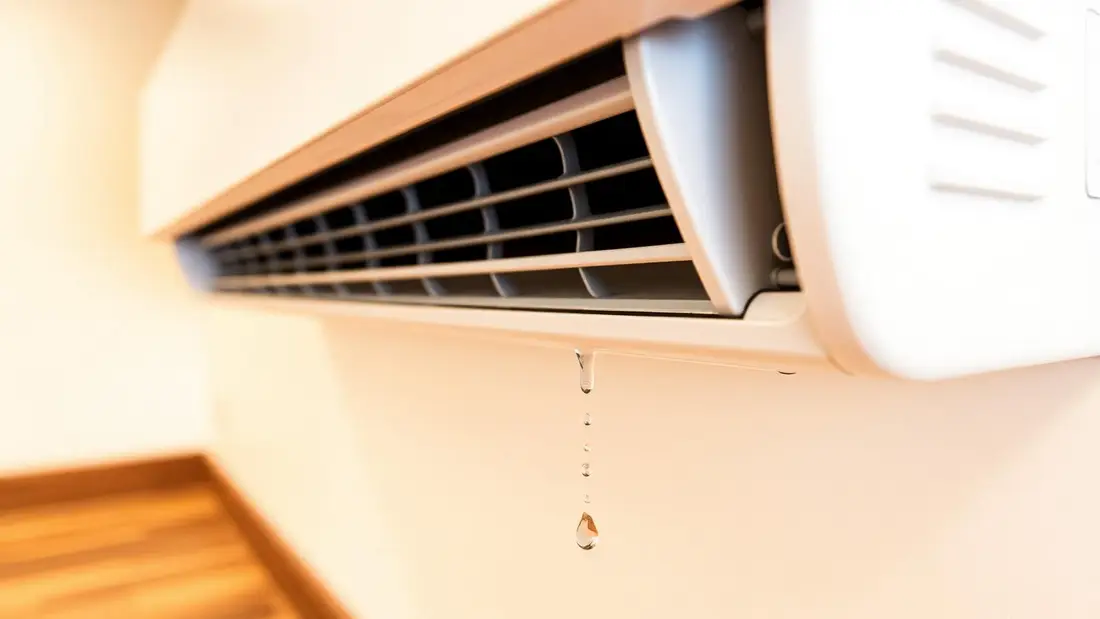
Finding water dripping from your AC, pooling on the floor, or staining your ceiling is unsettling, especially in a home you've spent years keeping in good condition. The good news is that AC water leaks are one of the most common calls we get in Dubai, and in most cases the cause is straightforward once you know where to look, and a single split AC repair in Dubai visit clears it.
Quick answer: A split AC leaks water indoors when condensate cannot drain away properly. The most common cause in Dubai is a blocked drain line, followed by a dirty or frozen evaporator coil, a damaged drain pan, a faulty condensate pump, or a unit that wasn't installed with the correct drainage slope, which needs corrective AC installation work.
Where Is the Water Coming From? Quick Diagnostic Guide
Where you see the water tells you a lot before you even open the unit.
| What you notice | Most likely cause |
|---|---|
| Water dripping steadily from the indoor unit itself | Blocked condensate drain line |
| Water only appears after the AC has been running for hours | Frozen evaporator coil melting |
| Water pooling on the floor below a wall-mounted unit | Cracked or overflowing drain pan |
| Ceiling stains below a ceiling-mounted or ducted unit | Drainage or insulation issue in the ceiling void |
| Water appears right after installation or a recent service | Incorrect installation slope or a loose drain connection |
| Musty smell along with the leak | Standing water and early mold growth in the drain system |
Common Causes of AC Leaking Water
1. Blocked Condensate Drain Line
This is the single most common cause we see in Dubai homes. The drain line carries condensate away from the unit, and over time dust, sand, and algae growth narrow the pipe until water backs up and overflows indoors instead of draining outside.
How to check: Look at the drain line where it exits the wall outside. If little or no water is coming out while the AC is running and cooling normally, the line is likely blocked.
2. Dirty or Frozen Evaporator Coil
A clogged air filter restricts airflow across the coil, which can cause it to freeze. When the unit cycles off or ice builds up faster than it can melt, the water overwhelms the drain pan and leaks out, often appearing worse after the unit has been running for several hours.
How to check: If the AC has also felt weaker on cooling recently, and you notice frost on the indoor unit or copper piping, a frozen coil is very likely part of the problem. This overlaps closely with the pattern we describe in our guide to AC blowing warm air.
3. Damaged or Cracked Drain Pan
The drain pan collects condensate before it flows into the drain line. Years of heat, vibration, and general wear can crack the plastic pan, especially in older units, letting water escape directly instead of draining properly.
How to check: This usually requires opening the unit, so it's best confirmed by a technician, but a leak that appears constant and unrelated to how long the AC has run often points here.
4. Faulty or Failed Condensate Pump
Ceiling-mounted and some ducted units use a small pump to push condensate uphill to a drain point. When this pump fails, water has nowhere to go but back into the unit and out through the ceiling or casing.
How to check: If the leak is coming from a ceiling unit and you can hear the pump but no water is discharging outside, the pump itself may have failed.
5. Incorrect Installation or Drainage Slope
Condensate drains by gravity, so the drain line needs a consistent downward slope. If a unit was installed without the correct slope, or the line was later disturbed, water can sit in the pipe and eventually back up into the home.
How to check: This is common in leaks that start soon after a new installation or after other work was done near the unit, and it needs a technician to correct properly.
6. Low Refrigerant Causing a Frozen Coil
Low refrigerant makes the evaporator coil run colder than it should, freezing moisture directly onto it instead of letting it drain normally. As the ice melts, it produces more water than the drain pan is designed to handle at once. This is one of the same faults that shows up when investigating why an AC is not cooling in Dubai.
How to check: This usually comes with reduced cooling performance as well, not just the leak on its own, and confirming it requires a certified technician with pressure testing equipment.
Why You Shouldn't Ignore It
Dubai's humidity means a small leak turns into a bigger problem faster than in drier climates. Standing water against drywall, ceiling panels, or wooden fittings can lead to visible staining and mold growth within a day or two, and water reaching nearby electrical points is a genuine safety risk. What starts as a straightforward drain cleaning job can turn into a much larger repair bill if ceiling or wall damage sets in first.
What to Do Right Now
- Turn the unit off at the switch, not just the remote, to stop more condensate from forming
- Place a towel or container under the leak to protect flooring
- Move furniture, electronics, and rugs away from the affected area
- Check the outdoor drain line exit for blockage if you can safely access it
- Do not attempt to open the indoor unit casing yourself if you're not familiar with it