The clearest signs your AC coil needs cleaning are visible dirt, cooling that has weakened and longer running times. Dirty coils can restrict airflow or heat transfer. However, these symptoms do not prove that cleaning will solve the problem: filters, refrigerant and electrical faults can produce similar symptoms.
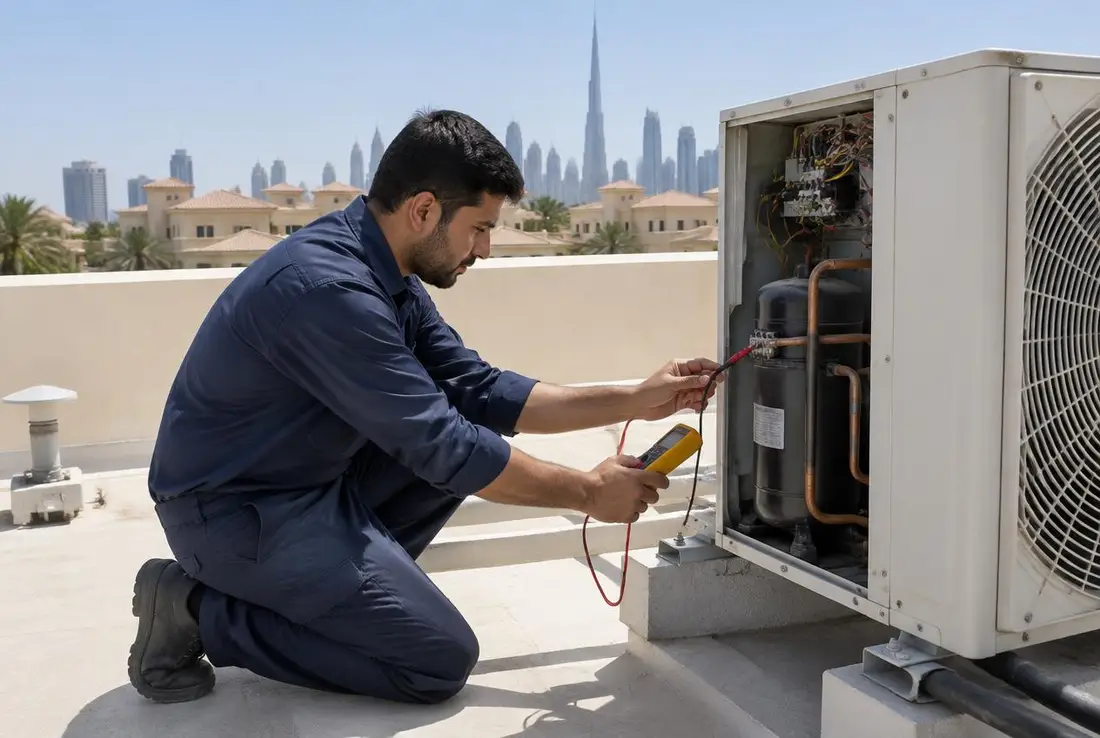
This guide helps Dubai apartment residents, villa owners and property managers decide whether to book professional AC coil cleaning in Dubai or arrange a fault diagnosis. The photograph is an illustrative image, not evidence of a completed customer job.
Evaporator or condenser: which coil needs cleaning?
The evaporator coil sits in the indoor unit or air handler and absorbs heat from indoor air. Dust that passes a dirty, damaged or poorly fitted filter can collect on its fins. The condenser coil sits in the outdoor unit and releases heat outside; outdoor dust and debris can obstruct it.
Split and ducted systems have both types. In a villa, the indoor coil may be above a ceiling and the outdoor unit on a roof. Do not climb or remove ceiling panels to inspect them. Coil cleaning and duct cleaning address different parts of the system.
7 signs your AC coils may need cleaning
1. Rooms take longer to cool
A dirty coil can reduce heat transfer, making cooling less effective. Compare similar weather, thermostat settings and occupancy before drawing a conclusion. Open doors, direct sunlight, a clogged filter or a refrigerant fault can also explain poor cooling. Lowering the thermostat repeatedly will not remove coil dirt.
2. The AC runs longer than usual
A system with fouled coils may work longer to reach the thermostat setting. Longer running during hotter weather is not automatically a fault, and inverter units may run continuously at reduced output. Look for a change from your own system's normal behaviour, especially when comfort also deteriorates.
3. Electricity consumption rises unexpectedly
Dirty coils are one possible contributor to increased energy use. Compare electricity consumption, not just the total DEWA bill, and consider weather, occupants and other appliances. There is no fixed saving every home will achieve after cleaning. Rising use alongside weak cooling warrants a system check.
4. Airflow from vents feels weaker
A heavily fouled indoor coil can restrict airflow, but a dirty filter, blocked return grille, blower fault or duct problem can feel similar. Start with the accessible filter and keep furniture away from vents. One warm villa room or floor can point to a zone or duct issue rather than dirty coils throughout the home.
5. Ice appears on the coil or refrigerant pipe
Turn cooling off if you see ice. Restricted airflow can contribute to freezing, but refrigerant problems can also cause it. Do not chip ice away, apply heat or keep restarting the AC. Arrange an inspection and protect the area below from thawing water where safe. Our frozen AC coil guide explains the other causes.
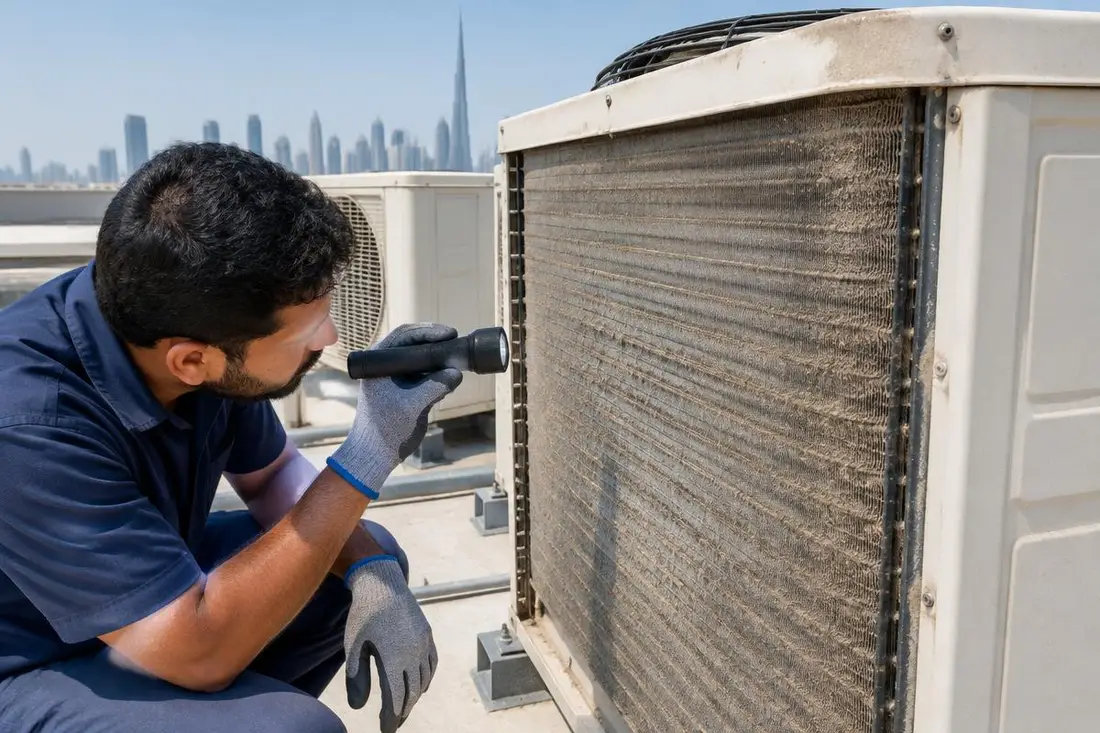
6. Visible dust coats the outdoor coil fins
Visible dirt on an accessible coil is a direct reason to have its condition assessed. Leaves and rubbish around the outdoor unit may also obstruct airflow. Observe from a safe position with the system off; do not reach through the grille. A clean-looking outer face does not prove the entire coil is clean.
7. Musty smells or water appear indoors
Moisture and dirt around the evaporator area may contribute to odours. However, the drain pan, condensate line, filter or ducts may be responsible instead. Smell alone does not prove mould, and coil cleaning alone may not clear a blocked drain. Record where the smell or water occurs and when it starts.
Keep away from wet electrical equipment. A burning smell, smoke or repeated breaker trips calls for urgent attention, not routine cleaning. Switch the system off if safe and arrange emergency AC repair.
Safe checks before you book
- Check the thermostat: select cooling mode and a temperature below the room temperature.
- Turn the system off before accessible checks: follow the manual for filter access; do not open electrical or coil panels.
- Inspect the filter: clean only a washable filter as directed, or replace a disposable one with the correct specification. Refit it properly.
- Check airflow paths: keep supply and return grilles clear and observe the outdoor unit without climbing or reaching inside.
- Record symptoms: note affected rooms, ice, leaks and recent changes. Safe photos can help explain the issue.
Do not pressure-wash coils, spray household chemicals into equipment, mix cleaning products or open refrigerant connections. Delicate fins bend easily, and water can damage nearby components. Our filter cleaning guide covers the separate task you may be able to do yourself.