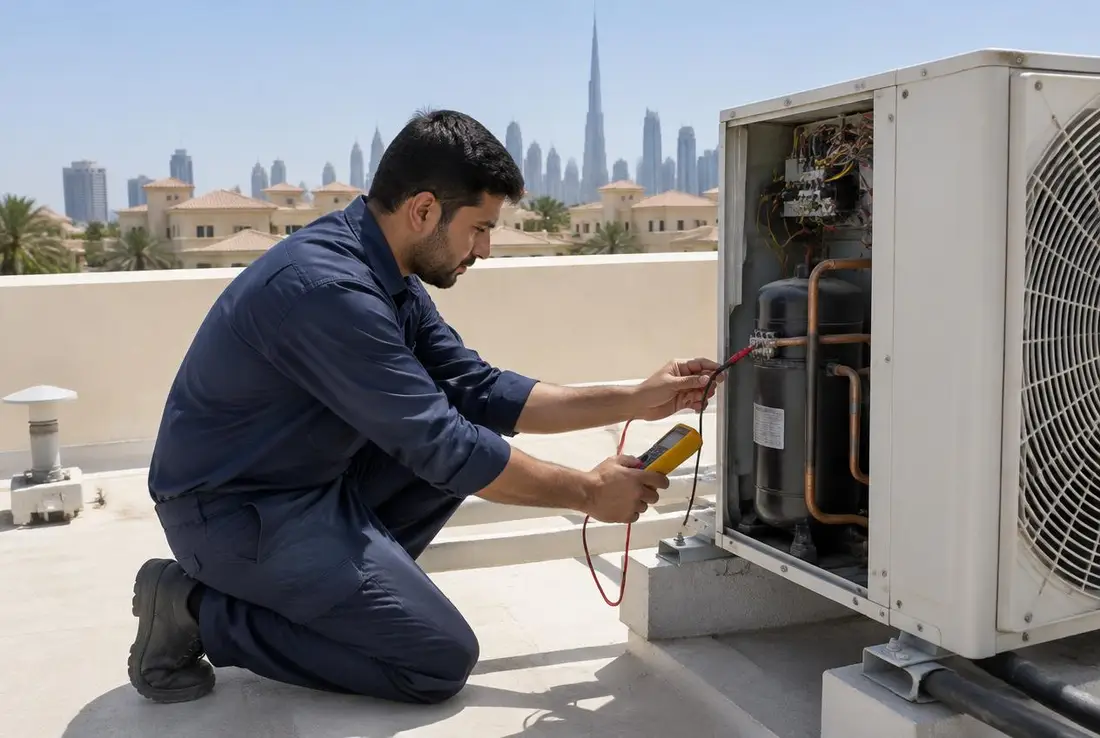
AC Gas Refill Cost in Dubai (2026)
Quick answer: A fixed-price AC gas refill in Dubai costs AED 350–450 for a straight R-410A top-up and AED 500–800 for leak repair plus a full recharge. We charge the same rate day or night, include a 12-month leak-repair warranty, and deduct the diagnostic from the repair if you go ahead.
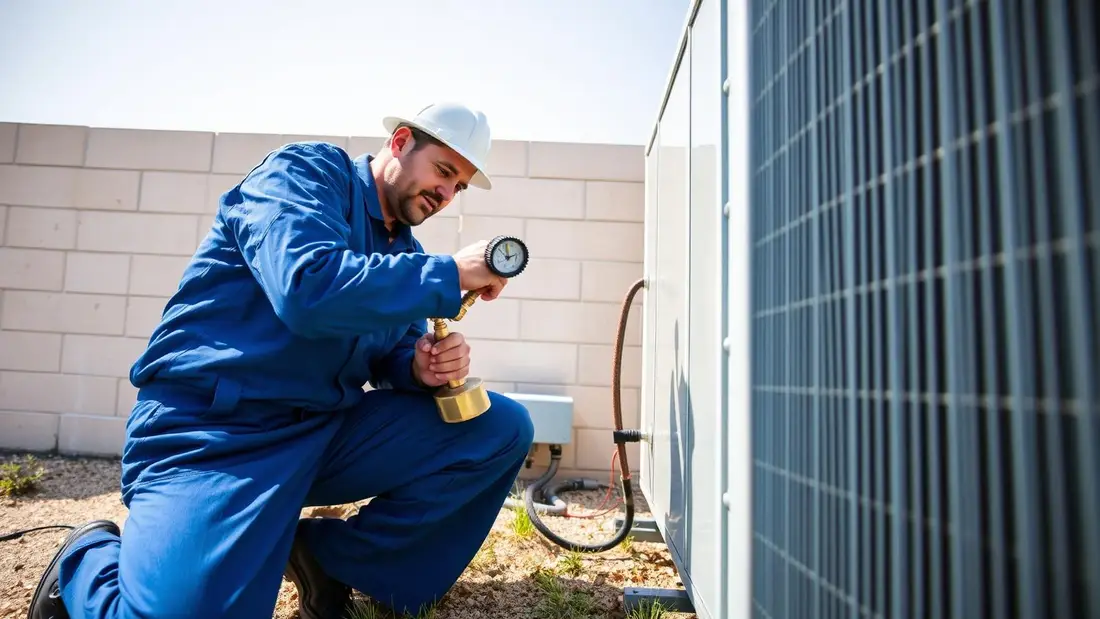
The price we quote is the price you pay. Every gas refill includes a nitrogen pressure test, electronic leak detection, repair of the located leak, deep vacuum to 500 microns, charge-by-weight recharge, and a 12-month leak-repair warranty. If a technician skips the leak repair, you will be calling again in 3 months.
AC gas refill cost in Dubai depends on the refrigerant type and whether the leak is repaired. These are the fixed 2026 prices we charge for AC gas refill in Dubai, all inclusive of labour and gas:
| Service | Cost (AED) |
|---|---|
| R-410A top-up (no leak repair) | 350–450 |
| Leak repair + vacuum + full recharge (R-410A) | 500–800 |
| R-32 top-up | 300–420 |
| R-22 top-up (phase-out pricing) | 450–650 |
| Coil replacement + recharge | 1,400–2,200 |
| Ducted / central AC recharge | 800–1,600 by tonnage |
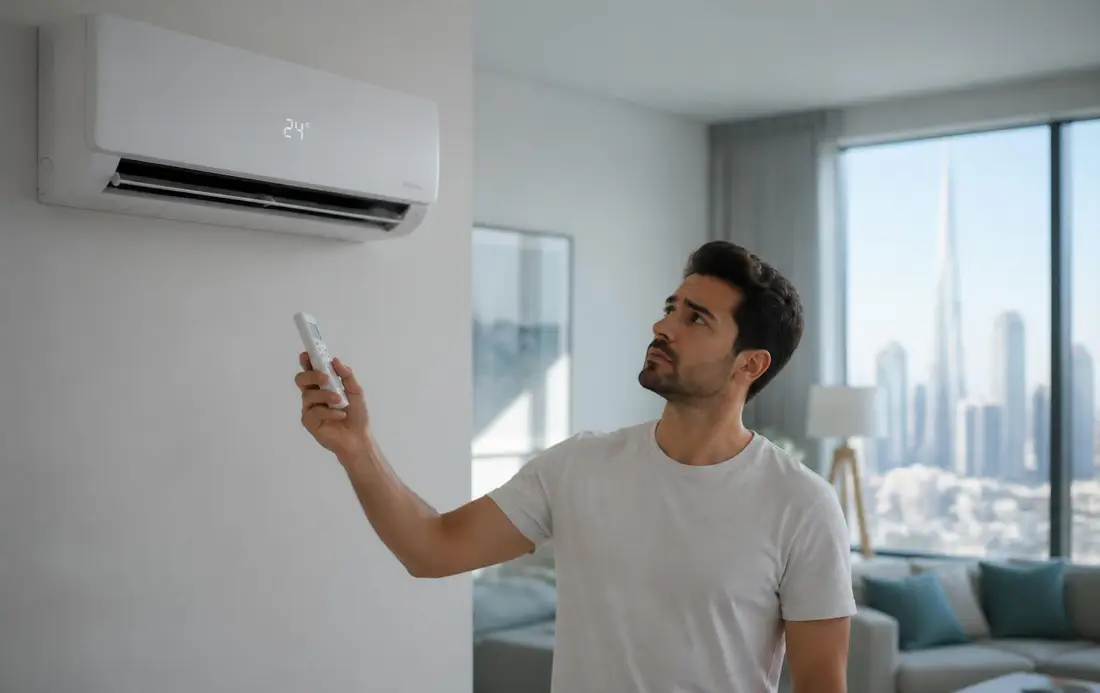
Warning: any technician who quotes under AED 200 for a gas refill is doing a top-up only and not fixing the leak. Your AC will be low again within 2–4 months, and each cycle damages the compressor and evaporator. If the unit is already blowing warm air, read our guide on why an AC blows warm air in Dubai before booking a refill, or call our 24 hour AC repair team if the flat is unusable tonight.
Need a certified technician today? Call +971552956400 or book online. We cover all Dubai areas, charge no call-out fee, and deduct the diagnostic from the repair if you go ahead.
AC Gas Refill Prices by Dubai Area
The table above is the base rate. Travel and access conditions in different parts of Dubai can shift the final bill slightly. Here is what we typically quote in 2026, all inclusive:
| Area | R-410A top-up | Leak repair + full recharge | Typical response time |
|---|---|---|---|
| Al Quoz, Al Barsha, Business Bay | AED 350–400 | AED 500–700 | 35–50 min |
| Dubai Marina, JLT, Jumeirah | AED 350–420 | AED 500–750 | 40–60 min |
| JVC, JVT, Al Furjan | AED 350–400 | AED 500–700 | 45–60 min |
| Palm Jumeirah, Arabian Ranches | AED 400–450 | AED 600–800 | 60–75 min |
| Downtown Dubai, Deira, Bur Dubai | AED 350–450 | AED 550–800 | 40–60 min |
Villa and ducted systems are priced by tonnage, not by area. A 3-ton central system in Arabian Ranches usually costs AED 1,000–1,400 for a full recharge with leak repair, while a 1.5-ton split in Marina is at the lower end of the table.
7 Signs Your AC Needs Gas in Dubai
- Warm or lukewarm air: the vent temperature is less than 10 °C below room temperature.
- Ice or frost on the copper pipes going into the outdoor unit.
- Hissing or bubbling sound: audible refrigerant escaping from a joint or coil.
- DEWA bill jumps 15–25% without any change in usage.
- Cooling takes noticeably longer than last summer to reach set temperature.
- Water leaking from the indoor unit: a frozen coil melting once turned off.
- Compressor cycles on and off rapidly: low-pressure cut-out is triggering.